Aircraft Strike: Jet Fighter
Game SkillsAction
3.2566.00 Reviews
- Version
- 3.7.9
- Installs
- 10.00M
- Age Rating
- Everyone
Screenshots
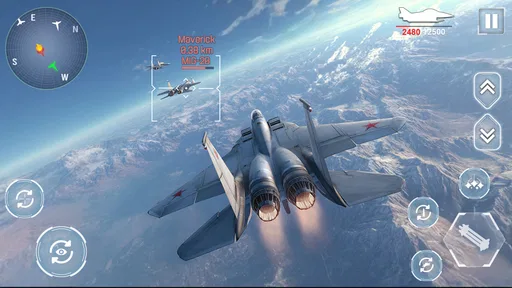
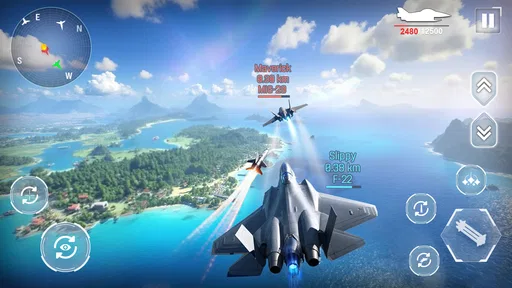
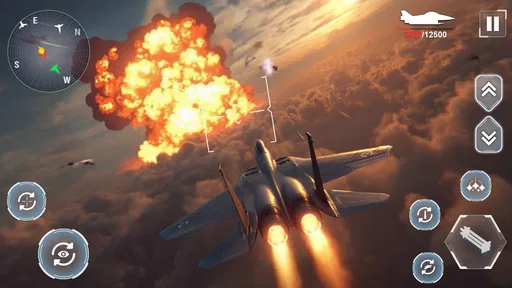
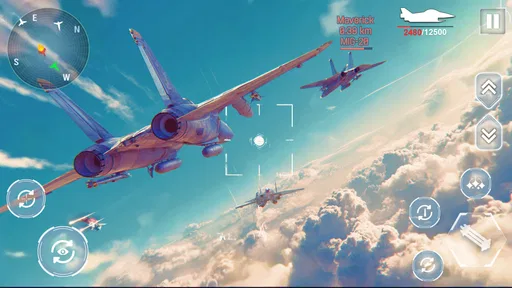
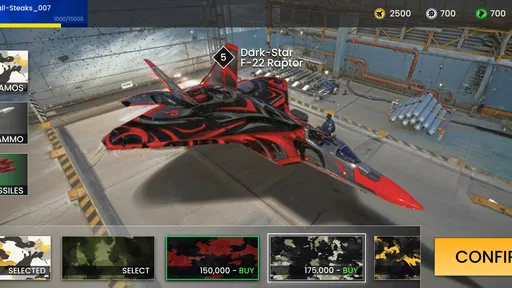
Our Review of Aircraft Strike: Jet Fighter
 Analysis by Appyee
When I tried Aircraft Strike: Jet Fighter, I approached it as a quick action game rather than a full flight-training simulator. That distinction matters. The idea is to take modern war jets into fast aerial combat, but the experience is built for short bursts of play, simple access, and immediate action. I can imagine it working well on a shared household phone or tablet, especially when one person wants a few minutes of entertainment without committing to a long campaign.
The game is free to download, belongs to the action category, and is made by Game Skills. Its broad appeal is easy to understand: aircraft combat has an instantly recognizable hook, and the game does not ask a new player to learn a complicated aviation vocabulary before getting started. At the same time, I would not recommend it to someone searching for a detailed cockpit simulation with realistic procedures, deep aircraft management, or the precision of a dedicated console flight game.
How Aircraft Strike fits into shared everyday use
In my experience, the most practical way to enjoy this game is in short, clearly separated sessions. Imagine a family tablet being used in the living room: one person finishes a video, another wants a quick game, and a younger player takes a turn flying missions. An action game based around jets makes that handoff simple because the purpose is obvious from the first screen. There is no need to explain a complicated story before somebody can begin experimenting with the controls.
That shared-device appeal comes with a small but important trade-off. A game designed for quick access can also encourage impulsive play, especially when a player is trying to improve a result or unlock something more quickly. I would treat it as a game for agreed breaks rather than something left running indefinitely in the background. On a personal phone, that choice is yours; on a household device, a basic turn-taking routine avoids arguments and makes the experience more pleasant.
The action format also helps when different people have different skill levels. An experienced player can focus on movement, aiming, and survival, while a newcomer can learn by repeating the fundamentals. I found that this is more welcoming than many realistic flight games, where the first few minutes can feel like a lesson instead of entertainment. The downside is that players who enjoy mastering complex systems may reach the limits of the simplified approach sooner.
What the first sessions feel like
The central attraction is the sensation of controlling a fighter aircraft during combat. I paid attention less to realism and more to whether the game made each short session feel purposeful. It works best when I treat every attempt as a focused challenge: stay in control, line up an attack, react quickly, and see whether I can perform better the next time.
That mindset is useful for a shared device because it creates natural stopping points. A player can finish a run and hand over the phone instead of occupying it for an entire evening. However, the game is not the best match for a player who wants a quiet, exploratory aviation experience. The emphasis is firmly on action, so anyone expecting relaxed sightseeing or authentic aircraft study should look elsewhere.
I also recommend beginning with modest expectations about progression. The store presentation places the focus on war jets and aerial combat, not on a richly documented military world. I would therefore judge the game by how enjoyable its moment-to-moment flying is, rather than by whether it provides the depth of a large simulation. That simple change in expectations makes the experience feel more coherent.
Setting boundaries before handing over the device
Because the game is free, it is easy for a household to install it as a casual option. The important boundary is that free access does not mean every part of the experience is necessarily without cost. The game includes in-app purchases ranging from $0.99 to $9.99 per item, so I would discuss spending before allowing a child to use a shared device. That conversation is more useful than assuming the word “free” settles the issue.
I would also decide who is responsible for purchases on the device. If several people use the same phone or tablet, a child may not understand that a tap can affect the account holder. The safest household habit is simple: no purchase without asking first. This is not a criticism unique to this game; it is a practical rule for any free action title that offers optional paid items.
Another sensible boundary is session length. Since the game is built around fast aircraft action, it can be tempting to start another attempt immediately after finishing one. In my case, setting a stopping point before playing worked better than trying to stop only when interest disappeared. For a shared screen, a short timer or a fixed number of turns also makes coordination easier, without pretending that the game itself provides family scheduling tools.
Device readiness matters too. The minimum operating-system requirement is Android 7.0, which means older devices may not qualify even if they still handle other basic games. Before planning to use an aging household phone, I would check its software version and available storage. I would also update the game when appropriate, since the current version is 3.7.9 and compatibility can be more comfortable when the app and operating system are not far behind.
Coordinating turns without built-in assumptions
Aircraft games naturally invite comparison: who stayed in the air longer, who aimed better, and who handled a difficult moment more calmly. That can be fun between siblings or friends, but it can also make a younger player feel that every session is a test. I prefer setting different goals for different players. An adult might focus on accuracy, while a beginner simply practices control and learns the layout.
This approach reveals one of the game’s useful strengths: it can support informal coaching. A more experienced player can explain how to approach a turn or when to avoid rushing into danger, then let the newcomer try. The lesson stays connected to the action instead of becoming a separate tutorial. Still, I would avoid presenting every failed attempt as a mistake that needs correction. Some players enjoy experimenting, and constant advice can remove the fun.
For a household with one shared screen, a written turn order can be surprisingly effective. I would keep it simple: each person gets a short session, then gives the device back. If the game has a result worth discussing, talk about the decision that produced it rather than only the final outcome. That encourages better play and reduces the pressure to chase an impressive number.
There is also a useful distinction between playing together and playing competitively. The game’s aircraft-combat premise can make it feel competitive even when people are only taking turns. If the household wants a calmer experience, players can treat each session as practice and share tips. If everyone enjoys competition, agree in advance that purchases will not be used to settle a contest. That keeps optional spending separate from skill.
Age context, trust, and the right player
The content rating is Everyone, which makes the game easier to consider for a broad household audience. Even so, age ratings do not replace an adult’s judgment about a particular child. A young player may be comfortable with the aircraft theme, while another may find repeated combat less appealing. I would watch the first session and ask whether the tone feels exciting, stressful, or simply boring to that player.
Trust is especially relevant when the game is installed on an adult’s device. I would show a child where the game begins, explain that purchases require permission, and make it clear that handing over the phone does not mean unrestricted access to other apps. Those are device boundaries, not features I would claim the game includes. They are simply good habits when entertainment is shared.
The game has attracted over ten million installs, so it is clearly easy for many players to discover and try. Its average rating is 3.2, which suggests a mixed reception rather than universal approval. I read that combination as a reason to test the actual feel of the controls before investing time or money. Popularity can tell me that the concept reaches people; it does not guarantee that the pacing or handling will suit everyone.
For a child who wants a straightforward jet-themed action game, this may be a reasonable choice. For a player who wants a nonviolent puzzle, a creative sandbox, or a realistic aviation simulator, I would choose a different category entirely. The same is true for adults who dislike repeated attempts and arcade-style action. The game’s appeal depends heavily on enjoying the fantasy of taking a fighter into combat without demanding professional-level realism.
Where it sits beside other aircraft games
Compared with a traditional flight simulator, this game is easier to approach but less satisfying for someone who wants authentic aircraft behavior. A simulator usually rewards patience, careful setup, and learning procedures. Aircraft Strike is better suited to the opposite mood: open it, get into the action, and concentrate on immediate reactions. I would choose it for a spare moment and a simulator for a longer, more deliberate session.
Compared with a general mobile action game, the aircraft theme gives it a clearer identity. You are not simply moving a character through another familiar arena; the appeal comes from aerial movement, weapons, and the feeling of controlling a jet. That focus is a strength when the theme matches your interests. It becomes a weakness if you want broader variety, because the game’s identity is tied closely to flying and combat.
Compared with a premium game that charges once at installation, the free entry point lowers the risk of trying it. The trade-off is that optional purchases can complicate a shared-device arrangement. I would rather let a household test the free experience first, then decide whether anything paid is genuinely useful. A purchase should solve a clear preference, not be made simply because a player feels stuck after a difficult attempt.
The game also differs from multiplayer-focused alternatives in how I would use it at home. I would not build a family routine around assuming that everyone will be online at the same time or share the same competitive goals. Its strongest household role is as a turn-based, informal activity on one device. That makes it easier to coordinate, but it may feel limited to players who specifically want social competition.
Practical ways to get more from each session
My first tip is to separate control practice from score chasing. During the opening attempts, I would concentrate on keeping the aircraft stable and understanding how quickly it responds. Only after that would I worry about improving an outcome. This reduces the frustration that comes from trying to learn movement and win at the same time, especially when a beginner is playing in front of more experienced family members.
My second tip is to use the game as a short focus exercise rather than background entertainment. Put the device in landscape position if that is how the controls are most comfortable, hold it securely, and remove distractions before starting. I would not play while walking, eating near the device, or passing it around during an active attempt. Small habits like these make a fast action game feel more controlled and reduce accidental taps.
A third useful trade-off is deciding whether guidance helps or hurts. When I play with someone new, I offer one suggestion at a time, such as concentrating on movement before aiming. Giving a long list of instructions makes a simple game feel complicated. Once the player understands the basic rhythm, I step back and let them discover their own approach. That is particularly important for children who may value experimentation more than efficiency.
For adults sharing the game with children, I would also keep purchase decisions outside the excitement of a difficult session. If a player asks for an item after losing, wait until the frustration has passed and discuss what the purchase changes. This protects trust and helps the child understand that optional spending is a choice, not a requirement for being good at the game.
One final tip is to notice when the game has stopped being the right kind of entertainment. If sessions become repetitive, tense, or dominated by requests to buy something, take a break rather than forcing continued play. The aircraft theme will not compensate for a poor fit in temperament. Sometimes a slower simulator, a puzzle, or a cooperative game is a better household choice even if this title was easy to install.
Who should download it and who should pass
I would recommend it to someone who wants a free action game with a clear fighter-jet identity, quick sessions, and an uncomplicated reason to pick up the device. It is particularly suitable for casual players who enjoy trying to improve through repeated attempts. It can also work for a family that is comfortable setting its own rules around turns, screen time, and optional purchases.
I would be more cautious with a child who struggles to stop after one more attempt or who may tap through purchases without understanding the consequence. The Everyone rating is reassuring about broad accessibility, but household supervision still matters. I would also skip it for anyone seeking a detailed aircraft simulation, a substantial narrative, or a carefully structured cooperative experience.
The mixed average rating of 3.2 reinforces my personal conclusion: this is a game to sample, not one to choose solely because many people have installed it. The concept is accessible, but the moment-to-moment experience will depend on how much you enjoy arcade-style flying and whether the available depth is enough for you. I would give it a fair trial before considering any optional purchase.
My household verdict
After looking at it as both an action game and a shared-device option, I see Aircraft Strike: Jet Fighter as a straightforward choice for short aircraft-combat sessions. Its free starting point, Everyone age rating, and recognizable jet theme make it easy to introduce. Game Skills has aimed at immediacy rather than a demanding simulation, and that is exactly why it can fit between everyday tasks or into a quick turn on a family tablet.
Its limitations are just as clear. The action focus will not satisfy every aviation fan, and a shared device requires adults to set boundaries around time, access, and in-app purchases. The mixed rating means I would not promise that every player will love the controls or progression. I also would not confuse a large install base with proof that it is the best option for a particular household.
My recommendation is to try it as a no-pressure, short-session game first. If the jet combat feels enjoyable and everyone understands the household rules, it can earn a place in the casual rotation. If what you really want is realism, deep aircraft systems, or a richer social structure, choose a more specialized alternative. For the right player, though, this is an approachable way to turn a spare few minutes into an aerial action session without making the whole household rearrange its evening.
Verdict
Strengths of Aircraft Strike: Jet Fighter
- Fast-paced jet combat with short, easy-to-start missions.
- Simple controls make flying accessible for casual players.
- Wide selection of aircraft and weapons to unlock.
- Arcade-style action delivers satisfying explosions and dogfights.
- Playable offline, making it convenient for travel or limited data.
Limitations of Aircraft Strike: Jet Fighter
- Progression can feel repetitive after playing the same mission types.
- Upgrades may require significant grinding or repeated battles.
- Touch controls can feel imprecise during intense aerial maneuvers.
- Visual quality may vary across older or budget devices.
- Frequent ads can interrupt the experience between missions.
Similar Picks in This Category
View All
Temple Run 2: Endless Escape
Imangi Studios4.1

PUBG MOBILE
Level Infinite4.3

Free Fire: 9th Anniversary
GARENA INTERNATIONAL I4.4

Talking Tom: Hero Dash Run
Outfit7 Limited4.3

slither.io
Lowtech Studios3.9

Sniper 3D:Gun Shooting Games
Wildlife Studios4.6
Frequently Asked Questions
What is Aircraft Strike: Jet Fighter about?
Aircraft Strike: Jet Fighter is an action-focused aerial combat game in which you pilot fighter aircraft through enemy-filled missions. Gameplay typically combines fast shooting, maneuvering, target selection, and aircraft upgrades. Before downloading, keep in mind that the experience is designed for players who enjoy arcade-style dogfights rather than a highly realistic flight simulator with complex civilian aviation controls.
Is Aircraft Strike: Jet Fighter easy for beginners to play?
The game is generally approachable for new players because its controls focus on the essential actions needed during combat, such as steering, aiming, and firing. Early missions usually help you become familiar with the interface and enemy patterns. However, later stages may require faster reactions, better positioning, and thoughtful use of upgrades, so the difficulty can increase as you progress.
Does Aircraft Strike: Jet Fighter work offline?
Some parts of Aircraft Strike: Jet Fighter may be playable without a constant internet connection, particularly if the main missions and progress are stored locally on your device. Nevertheless, online access may still be needed for advertisements, updates, optional rewards, leaderboards, or other connected features. Check the current store description and test the game in airplane mode before relying on it offline.
Are there in-app purchases or advertisements in the game?
Like many free-to-download mobile action games, Aircraft Strike: Jet Fighter may include advertising and optional in-app purchases. These can potentially provide extra currency, faster upgrades, bonus aircraft, or the ability to remove advertisements, depending on the version available in your region. Review the purchase information in the app store and use device restrictions if children will be playing.
What devices are recommended for Aircraft Strike: Jet Fighter?
The game should run best on a relatively recent Android or iOS device with enough free storage, updated system software, and stable graphics performance. Older phones may open the game but experience slower frame rates, longer loading times, or reduced visual quality. Closing background apps and lowering graphics settings, when available, can improve performance during intense aerial battles.
Play our best games!


